Compromised Asset Detection

Detect Active Compromise on Your Network Edge

Gain visibility into compromised devices by analyzing inbound scanning activity and outbound communication with attacker-controlled infrastructure

Overview

Threat actors target edge devices like firewalls, VPNs, and routers to build botnets, stage malware, and maintain command-and-control. Once compromised, these devices either scan for new targets or quietly call back to attacker infrastructure. Today's threat actors use botnets to scan for vulnerable systems and launch mass, automated attacks. To do this, compromising edge systems are critical to their operations.

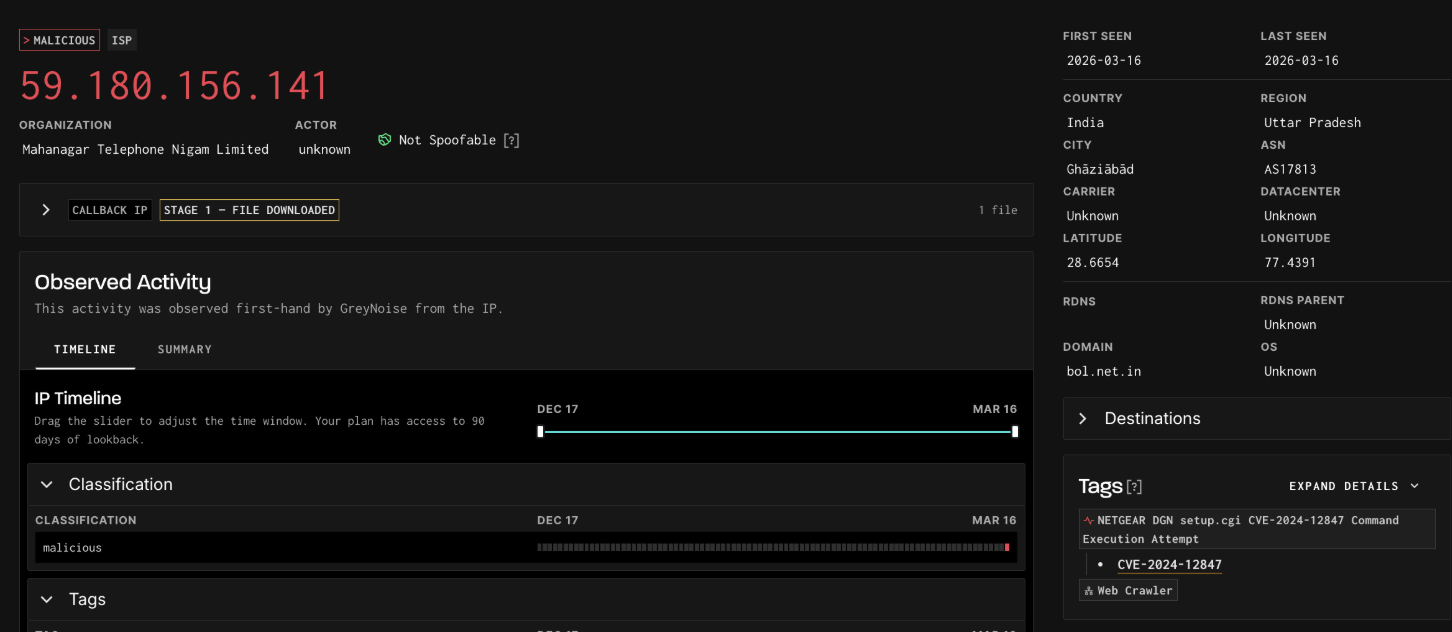
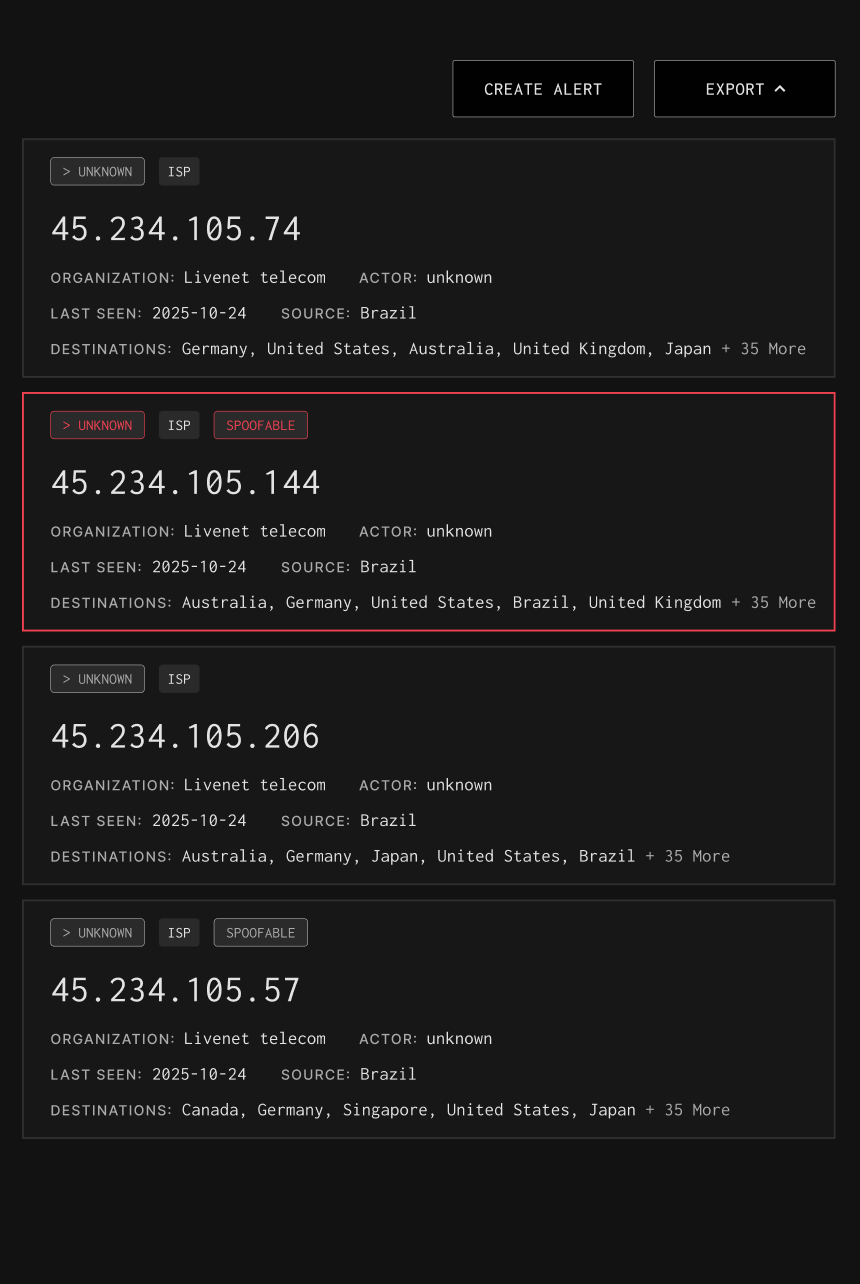
GreyNoise helps you spot compromised edge hosts fast using two independent signals. If your IP shows up as a scanner in GreyNoise, it’s likely been pulled into a botnet. If your outbound traffic matches a confirmed callback IP, it’s calling home to an attacker. Both are high-confidence indicators of compromise, even where EDR doesn’t exist. Compromised devices often behave like attacker infrastructure, making it likely that a compromised device will probe the GreyNoise sensor network or interact with a known malicious IP.
How GreyNoise Helps You
Find Your Compromised Assets

Identify Abnormal Outbound Traffic

GreyNoise matches your outbound traffic against confirmed malicious and callback infrastructure derived from real exploit activity. A hit is a high-confidence signal that a device is calling out to attacker-controlled systems.

Faster Containment

Early visibility into compromised assets, from both scanning behavior and outbound callbacks helps teams isolate hosts and respond before damage spreads.

Strengthen Incident Investigations

Combine scanner IPs, callback infrastructure, and malware hashes to investigate suspicious activity across both inbound and outbound signals.

Block Malicious Outbound Connections

GreyNoise provides query-based, dynamic blocklists that prevent devices on your network from communicating with both known malicious scanner IPs and confirmed C2 infrastructure.

Explore Available Fields

Filter by category & search available IP fields and their uses with GreyNoise.
Categories
Thank you! Your submission has been received!
Oops! Something went wrong while submitting the form.
NAME
Description & Use
SHA1
SHA-1 hash of the collected file. Supports legacy systems and additional correlation across threat feeds.
C2 Malware File Analysis
MD5
MD5 hash of the collected file. Enables compatibility with older detection tools and IOC matching workflows.
C2 Malware File Analysis
File Size
Size of the collected malware file in bytes. Useful for filtering and identifying payload variants.
C2 Malware File Analysis
VirusTotal Detections
Detection ratio from VirusTotal (e.g., 51/77 engines). Provides independent confirmation of malicious classification.
C2 Malware File Analysis
Detection Rate
Percentage of antivirus engines detecting the file. Quick-glance indicator of how widely recognized the threat is.
C2 Malware File Analysis
First Seen
Date the callback IP was first observed in exploit payloads. Establishes how long the attacker infrastructure has been active.
Callback IP Intelligence
Last Seen
Most recent date the callback IP was referenced in a payload. Indicates whether the infrastructure is still in active use.
Callback IP Intelligence
SHA1
SHA-1 hash of the collected file. Supports legacy systems and additional correlation across threat feeds.
C2 Malware File Analysis
MD5
MD5 hash of the collected file. Enables compatibility with older detection tools and IOC matching workflows.
C2 Malware File Analysis
File Size
Size of the collected malware file in bytes. Useful for filtering and identifying payload variants.
C2 Malware File Analysis
VirusTotal Detections
Detection ratio from VirusTotal (e.g., 51/77 engines). Provides independent confirmation of malicious classification.
C2 Malware File Analysis
Detection Rate
Percentage of antivirus engines detecting the file. Quick-glance indicator of how widely recognized the threat is.
C2 Malware File Analysis
First Seen
Date the callback IP was first observed in exploit payloads. Establishes how long the attacker infrastructure has been active.
Callback IP Intelligence
Last Seen
Most recent date the callback IP was referenced in a payload. Indicates whether the infrastructure is still in active use.
Callback IP Intelligence

Don't become a botnet.