New! Attacker Exploited Citrix Zero-Day Three Days Before the CVE Existed


Splunk centralizes security telemetry for search, monitoring, investigation, and alerting. GreyNoise adds real-time edge observability and context to that telemetry through native searches, dashboards, and indicator feeds to help detect attacks on edge devices.
Pre-built dashboards, native SPL commands and a daily indicator feed operationalize four documented GreyNoise use cases in Splunk SIEM.
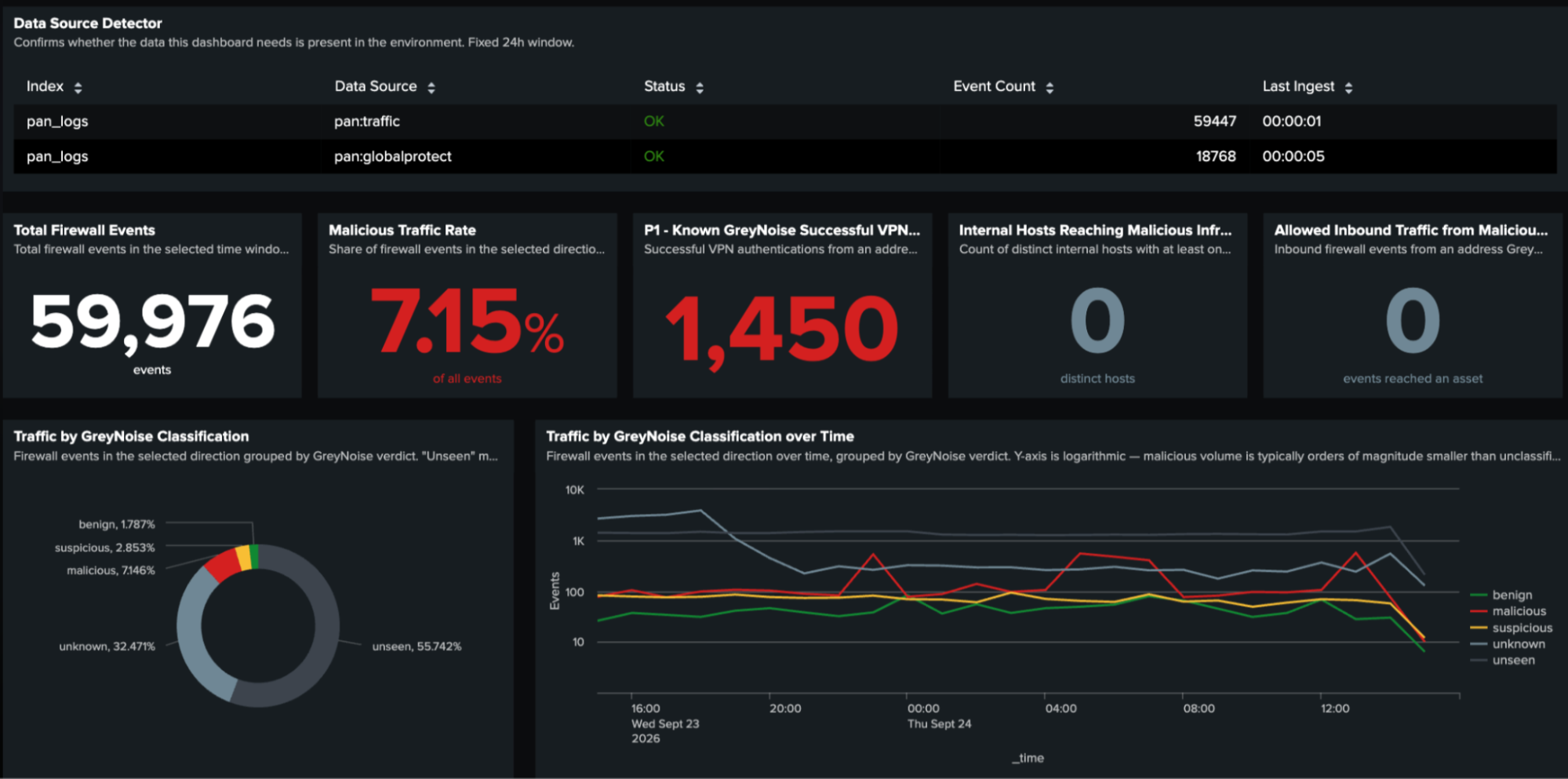
Most perimeter detection focuses on traffic coming in. When an internal corporate asset initiates an outbound connection to hostile infrastructure, it can signal a compromised edge device beaconing to command-and-control infrastructure, becoming a vector for data exfiltration, or participating in a larger botnet.
By correlating internal egress logs with GreyNoise in Splunk SIEM, analysts can isolate high-fidelity anomalies and surface internal hosts communicating with known command-and-control servers, active exploitation infrastructure, or botnet staging grounds. Any successful outbound connection to GreyNoise-classified malicious infrastructure becomes a high-fidelity indicator that warrants immediate investigation or containment of the internal host.
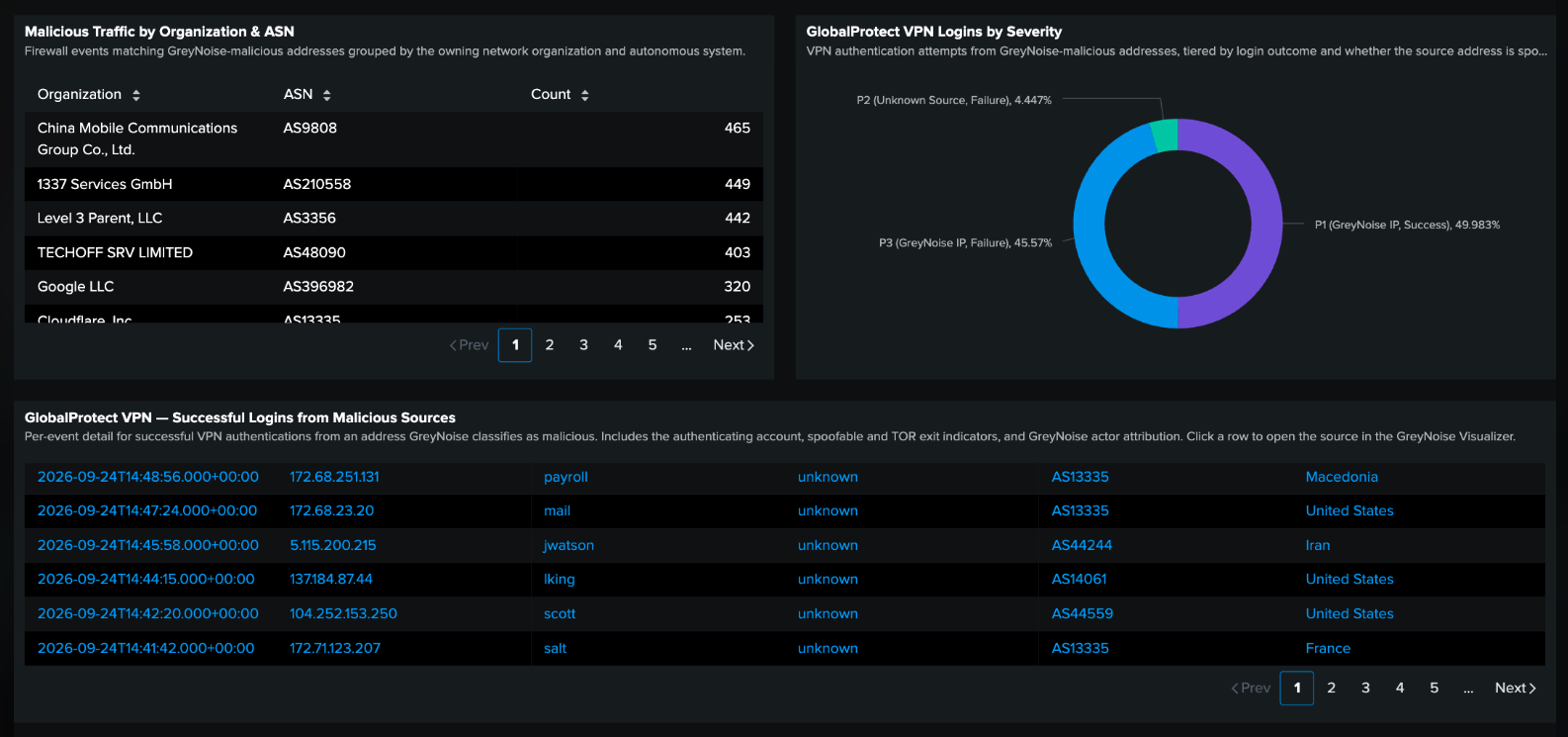
VPN and identity provider see thousands of authentication attempts daily, most from automated credential stuffing, brute force, and password spraying. The trouble is separating opportunistic activity from active threat behaviour. Hosts running mass scans or botnet and proxy infrastructure regularly attempt to authenticate, and standard detection logic often doesn’t flag it.
By integrating GreyNoise into the authentication log pipeline within Splunk SIEM, every successful and failed authentication event is cross-referenced against live GreyNoise edge intelligence. The integration assigns severity based on the login outcome and source IP classification. Successful logins from malicious infrastructure are escalated for immediate investigation, while failed attempts from flagged IPs remain visible for investigation and monitoring.
Modern enterprise networks face thousands of automated scans, exploit attempts, and brute-force attacks. Firewalls, web application firewalls, and proxies block most of this traffic, but perimeter gaps can arise from misconfigured rules, outdated access control lists, or legacy any-any policies. When these gaps appear, unauthorized traffic can enter the network without analysts knowing the connection came from a potentially malicious source.
GreyNoise cross-references inbound logs marked as allowed and isolates connections from IPs classified as malicious or suspicious. Splunk SIEM prioritizes those connections by source volume, giving analysts a focused view of potential perimeter gaps to investigate and fix. Each result points to both a connection that requires scrutiny and a security rule that may need to change.
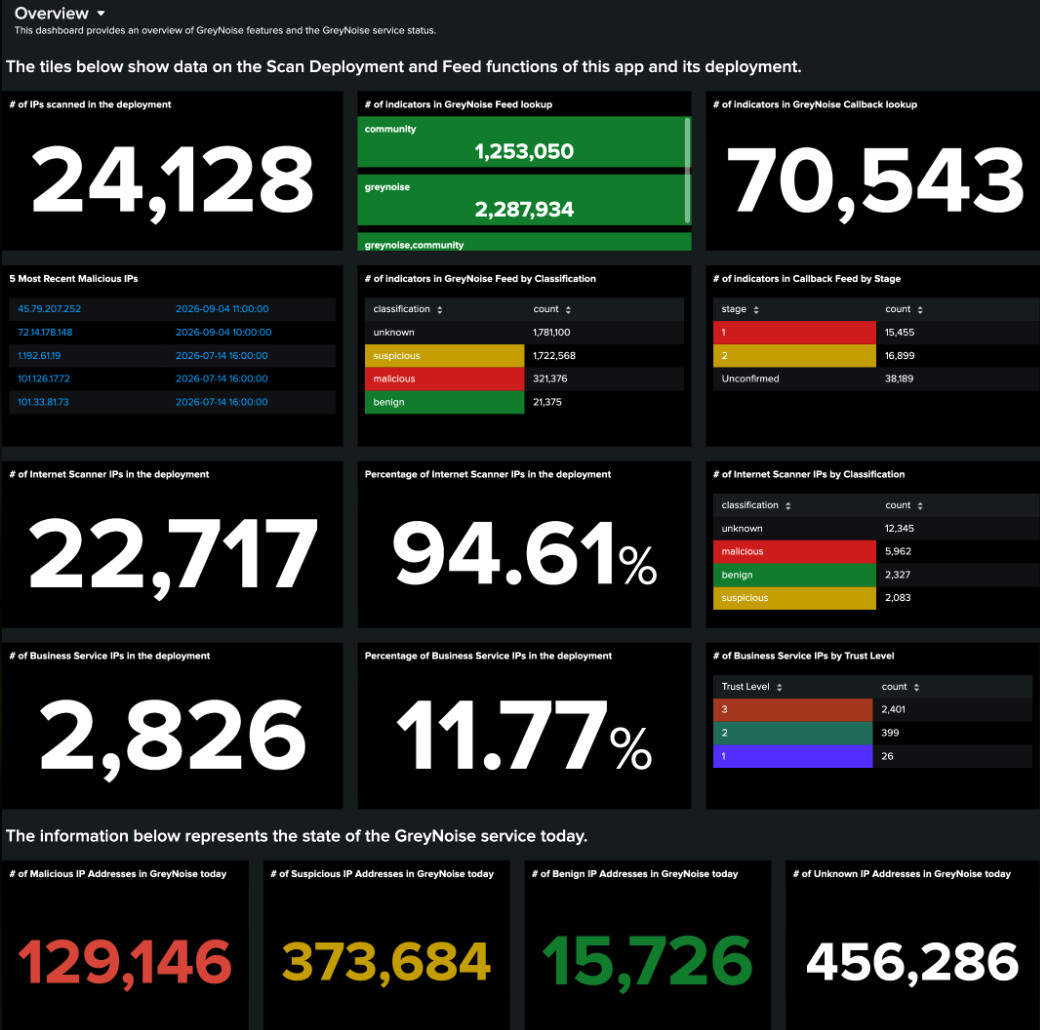
Every internet-facing organization is hit by automated scanners, bots, and opportunistic exploitation tools, generating thousands of firewall alerts per day that are not real threats. When predictable mass scanning and unusual activity share the same queue, the connections worth investigating become harder to see.
GreyNoise observes mass, indiscriminate internet scanning across its global sensor network. In Splunk SIEM, GreyNoise edge intelligence identifies and suppresses known scanning activity before it reaches the analyst queue. What remains is a smaller set of unknown, higher-priority activity that warrants investigation for a potential targeted attack.


