Vulnerability Prioritization

Is it really cRiTiCaL?

You don't have time to worry about unexploited vulnerabilities.
Get real-time insight into active exploitation to truly understand criticality.

Overview

As CVE counts grow, many organizations accept unpatched risks—until exploits go public and mass exploitation begins. When that happens, every minute counts.

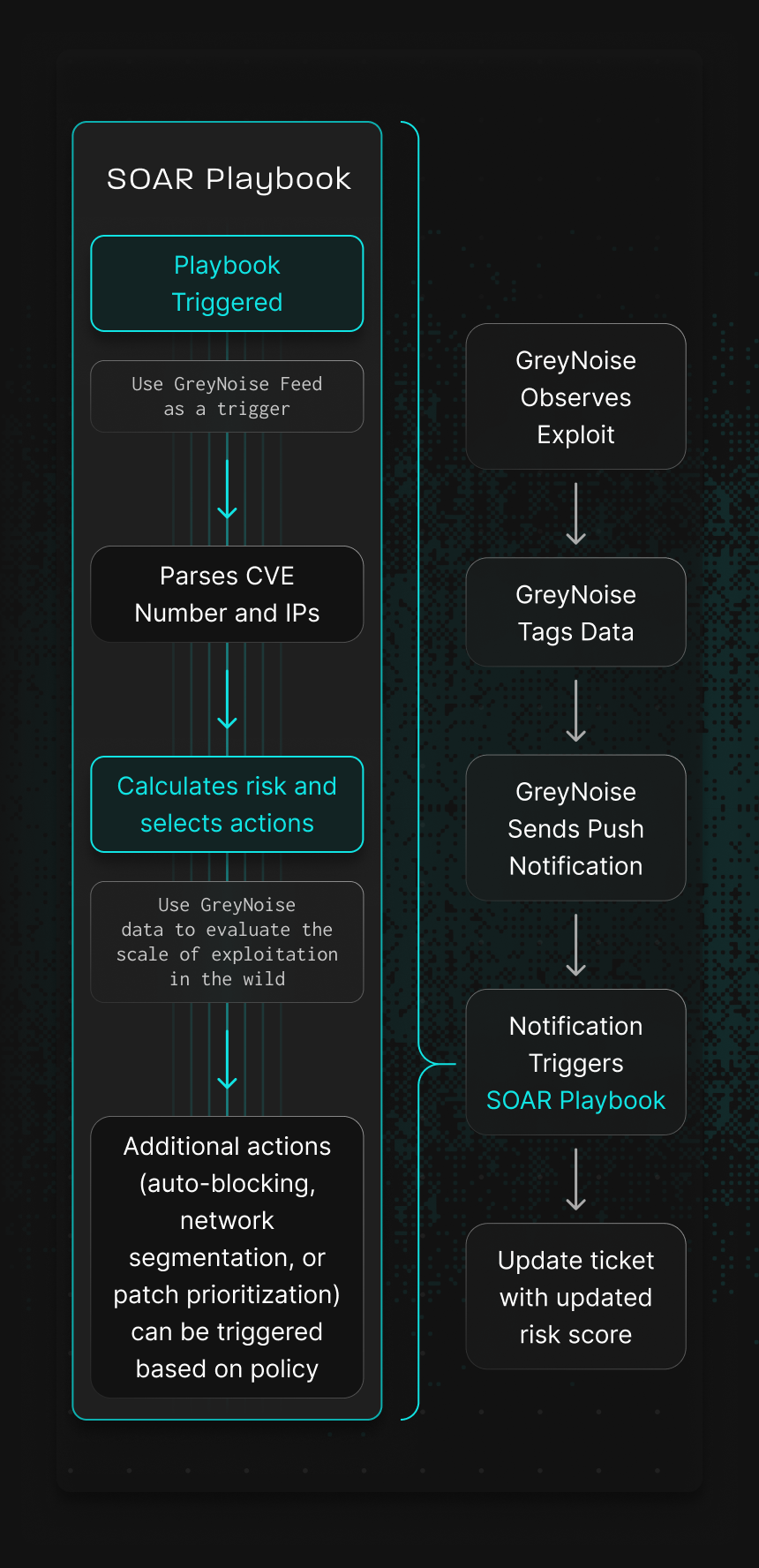
GreyNoise helps you focus on actively exploited vulnerabilities. Unlike static severity and probability scores, GreyNoise supplies real-time, primary-sourced intelligence on attacks we see in-the-wild.
How GreyNoise Helps You
Prioritize the Most Urgent Vulnerabilities

Prioritize Exploited Vulnerabilities

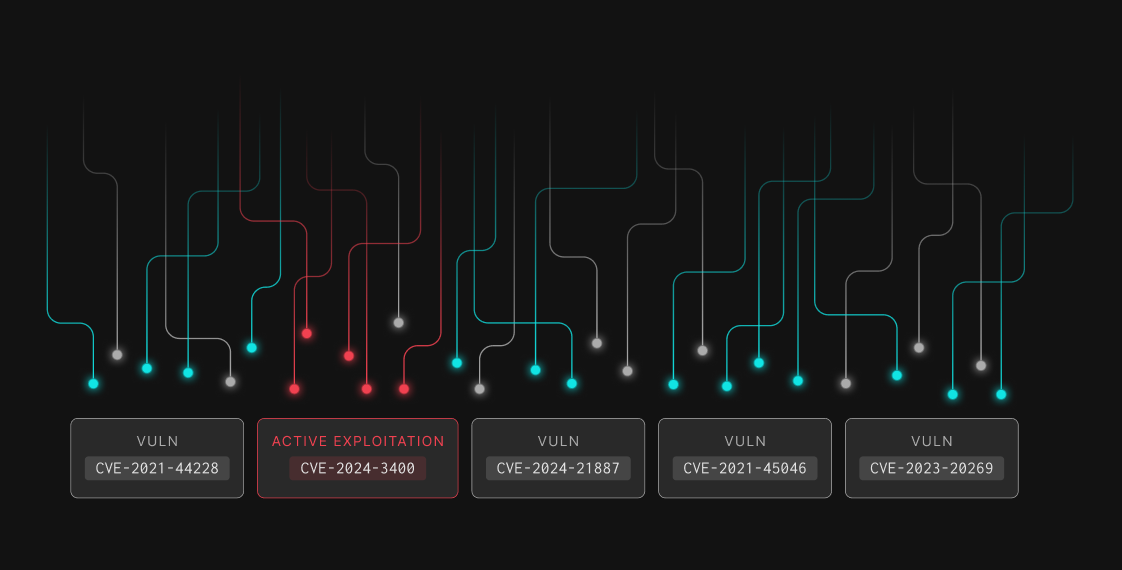
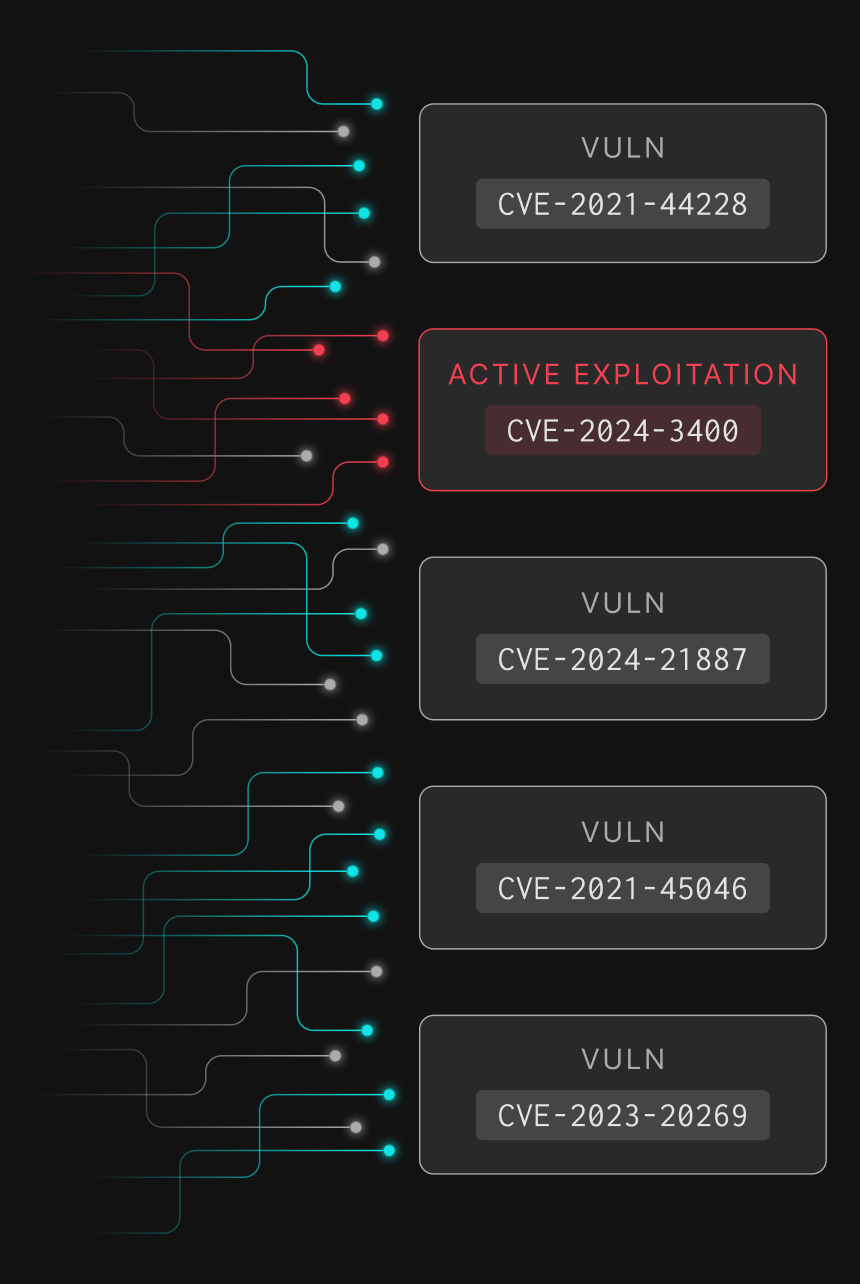
GreyNoise highlights CVEs actively scanned or exploited, helping teams focus on real attacker activity—not theoretical risk.

Reduce Patch Fatigue

By filtering out untargeted CVEs, GreyNoise lets teams focus resources on vulnerabilities that matter most.

Validate Threat Exposure

Teams can match GreyNoise data to their assets to confirm which exploits truly affect them.

Data-Driven Patching

Linking remediation urgency to live threat activity helps justify priorities and prove data-driven patch management.

IP Blocking as Mitigation

Use GreyNoise query-based, dynamic IP blocklists for emergency mitigation as you implement longer-term fixes.

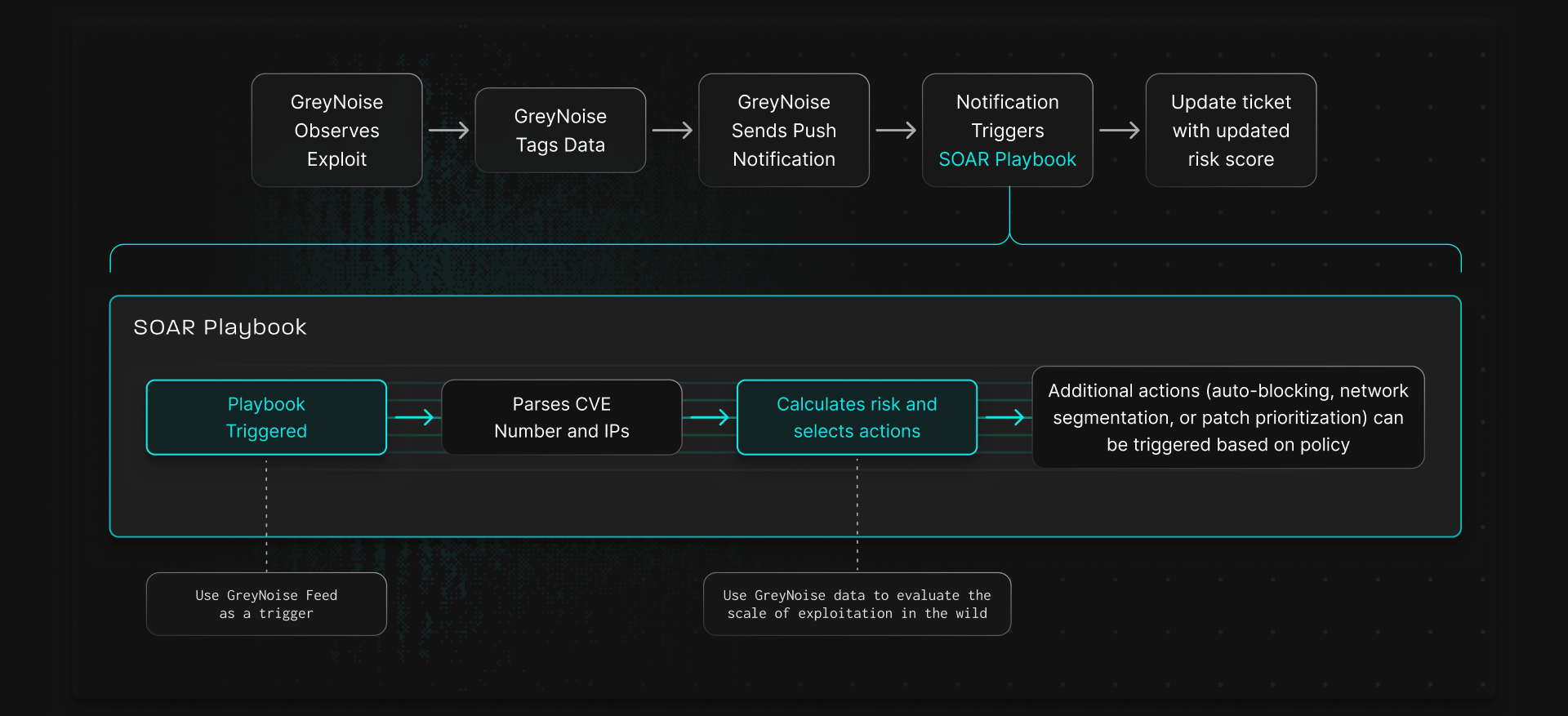
How it Works
Explore Available Fields

Filter by category & search available IP fields and their uses with GreyNoise.
Categories
Thank you! Your submission has been received!
Oops! Something went wrong while submitting the form.
NAME
Description & Use
Exploitation Details Attack Vector
The method attackers use to exploit the vulnerability (e.g., network, local, adjacent). Helps assess exposure across internet-facing vs. internal assets.
Exploitation Intelligence
Exploitation Details EPSS Score
EPSS score (Exploit Prediction Scoring System) associated with the exploitation.
Exploitation Intelligence
Exploitation Details Exploit Found
Indicates whether a working exploit is publicly available. Confirms attacker capability and should increase remediation priority.
Exploitation Intelligence
Exploitation Details Registered in KEV
Whether exploitation has been registered in the KEV (Known Exploited Vulnerabilities) database.
Exploitation Intelligence
Exploitation Stats
Statistical data about exploitation, including number of exploits available, and number of threat actors and botnets exploiting the vulnerability.
Exploitation Statistics
Exploitation Stats Number of Available Exploits
Total number of exploits available (public + commercial).
Exploitation Statistics
Exploitation Stats Number of Botnets Exploiting Vulnerability
Total number of botnets exploiting the vulnerability.
Exploitation Statistics
Exploitation Stats Number of Threat Actors Exploiting Vulnerability
Total number of known threat actors exploiting the vulnerability.
Exploitation Statistics
ID
Unique identifier for the record. Used to track and reference the vulnerability consistently across systems and reports.
Identification & Details
Timeline
Key timeline details about when the CVE was published, updated, and added to CISA (https://www.cisa.gov/known-exploited-vulnerabilities-catalog). Useful for understanding how long the issue has been known.
Timeline & Lifecycle
Timeline CISA KEV Date Added
Date the vulnerability was added to CISA’s Known Exploited Vulnerabilities (KEV) catalog. Vulnerabilities in KEV should be prioritized for remediation per federal guidance.
Timeline & Lifecycle
Timeline CVE Last Updated Date
The last date the CVE entry was updated in the database. Useful for tracking changes in severity, affected products, or exploit status.
Timeline & Lifecycle
Timeline CVE Published Date
The date the CVE was first published. Helps determine how long attackers have potentially been aware of the vulnerability.
Timeline & Lifecycle
Timeline First Known Published Date
Date when the first exploit associated with the CVE was published.
Timeline & Lifecycle
Details
Basic CVE details, including CVSS score (Common Vulnerability Scoring System), associated products & vendors, and NIST CVE recognition status. Provides context on the vulnerability itself.
Identification & Details
Details CVE CVSS Score
CVSS score assigned to the CVE. Commonly used in risk scoring but should be weighed alongside exploitation activity.
Identification & Details
Details Product
The product affected by the vulnerability (e.g., Apache HTTP Server). Used to match against an organization’s asset inventory for prioritization.
Identification & Details
Details Published to NIST NVD
Indicates if the vulnerability is published in the NIST National Vulnerability Database. Confirms official recognition and ensures compatibility with standard risk feeds.
Identification & Details
Details Vendor
The vendor or developer responsible for the affected product. Helps map vulnerabilities to vendor patch advisories and SLAs.
Identification & Details
Details Vulnerability Description
Summary of what the vulnerability is and how it works. Helps analysts understand potential impact and determine exploitability in their environment.
Identification & Details
Details Vulnerability Name
Human-readable name of the vulnerability. Practitioners use this for quick recognition when scanning advisories.
Identification & Details
Exploitation Activity
Observed IPs scanning or exploiting the vulnerability today, in the last 10 days, and the last 30 days.
Exploitation Activity
Exploitation Activity Benign IP Count (10d)
Total number of benign IPs GreyNoise observed scanning or exploiting this vulnerability in the last 10 days.
Exploitation Activity
Exploitation Activity Benign IP Count (1d)
Total number of benign IPs GreyNoise observed scanning or exploiting this vulnerability today.
Exploitation Activity
Exploitation Activity Benign IP Count (30d)
Total number of benign IPs GreyNoise observed scanning or exploiting this vulnerability in the last 30 days.
Exploitation Activity
Exploitation Activity Seen
Whether GreyNoise has observed activity related to this CVE.
Exploitation Activity
Exploitation Activity Threat IP Count (10d)
Total number of threat IPs GreyNoise observed scanning or exploiting this vulnerability in the last 10 days.
Exploitation Activity
Exploitation Activity Threat IP Count (1d)
Total number of threat IPs GreyNoise observed scanning or exploiting this vulnerability today.
Exploitation Activity
Exploitation Activity Threat IP Count (30d)
Total number of threat IPs GreyNoise observed scanning or exploiting this vulnerability in the last 30 days. Useful for long-term prioritization and trend analysis.
Exploitation Activity
Exploitation Details
Exploitation-related details pertaining to attack vector category, EPSS score (Exploit Prediction Scoring System), available exploits, and KEV (Known Exploited Vulnerabilities) registration. Guides whether to prioritize based on real-world attacker use.
Exploitation Intelligence

Let us be your patient zero.